
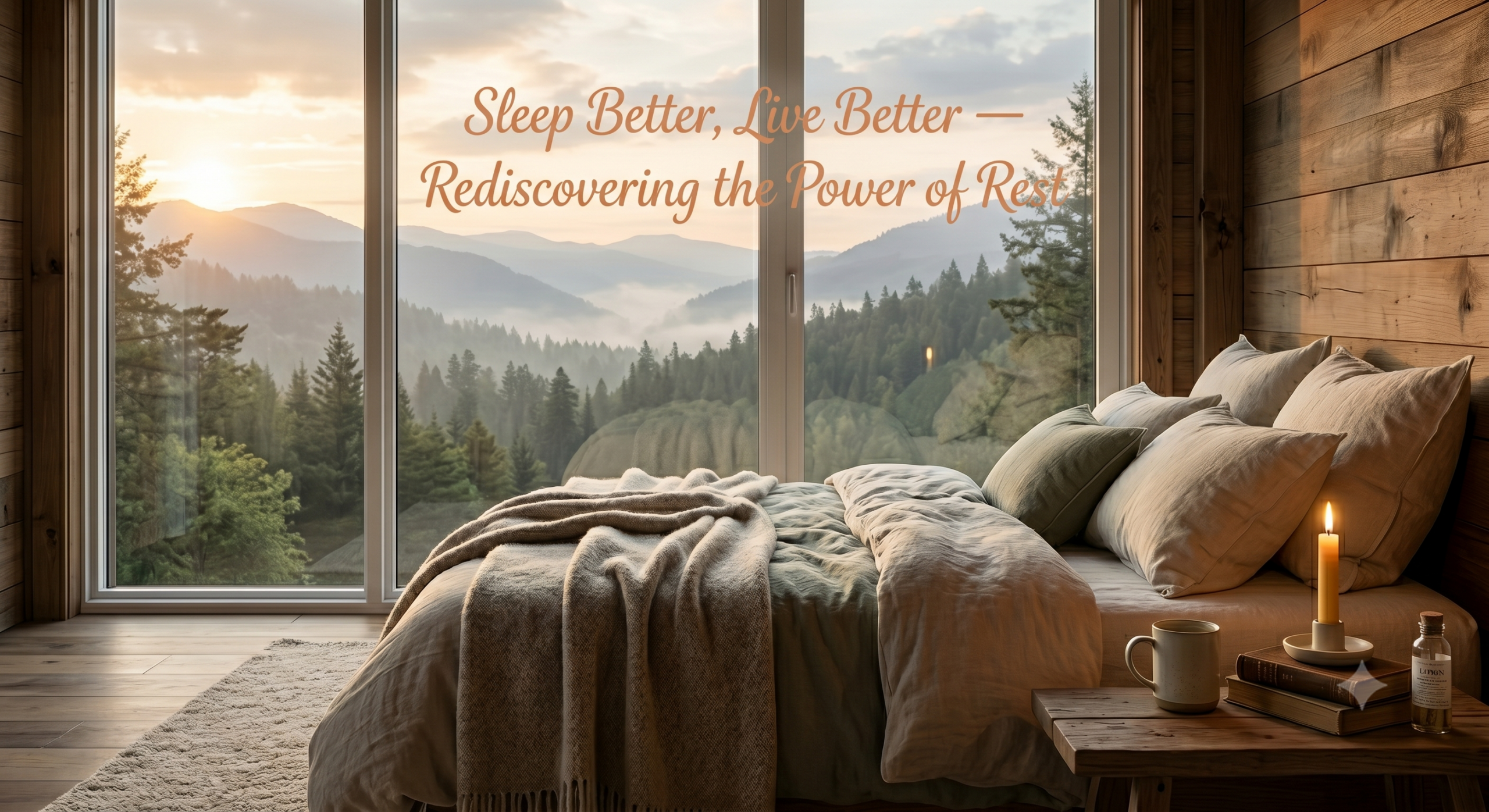
Sleep Better, Live Better — Rediscovering the Power of Rest
Sleep Better, Live Better — Rediscovering the Power of Rest
Many people in their 60s notice that sleep has changed. You used to fall asleep the moment your head hit the pillow. Now you lie there for an hour, tossing and turning, finally drifting off only to wake up at 3 a.m. — staring at the ceiling, unable to get back to sleep. Morning comes and you still feel exhausted.
Most people chalk it up to age. “That’s just what getting older feels like.” But that’s not the whole story. In many cases, declining sleep quality has less to do with age itself and far more to do with sleep habits and lifestyle choices that have quietly gone wrong.
So why does sleep matter so much?
While we sleep, the body isn’t resting — it’s working harder than ever. It repairs damaged cells, consolidates memories, and strengthens the immune system. Research shows that people in their 60s who consistently get poor sleep face higher risks of dementia, heart disease, and depression. Sleep isn’t a luxury. It’s maintenance.
So what can we actually do to sleep better?
5 Sleep Tips That Actually Work for People in Their 60s
First: go to bed and wake up at the same time every day. Your body has an internal clock, and consistency keeps it accurate. Sleeping in on weekends might feel like a treat, but it throws that clock off — and you pay for it all week.
Second: put down your phone at least an hour before bed. The blue light from screens suppresses melatonin, the hormone that tells your body it’s time to sleep. Try reading a book or doing some gentle stretching instead — your body will thank you.
Third: make your bedroom a sleep-only space. Watching TV or scrolling through your phone in bed trains your brain to think of the bed as an entertainment zone. When your brain associates the bed with sleep alone, drowsiness comes naturally when you lie down.
Fourth: avoid caffeine after 2 p.m. Caffeine stays in your system much longer than most people realize. That afternoon cup of coffee can still be affecting your sleep hours later at night.
Fifth: keep naps under 30 minutes. A short nap between 1 and 2 p.m. can be genuinely refreshing. But nap too long, and you’ll find yourself wide awake at midnight, wondering why you can’t sleep.
Good sleep isn’t a luxury — it’s the most fundamental investment you can make in your health after 60. One night of truly restful sleep does more for your body than a month’s worth of expensive supplements.
Tonight, try putting your phone down a little earlier. You might be surprised what a difference it makes.
For more information on healthy sleep, visit the Sleep Foundation.
Next post: Walking Is Enough — The Paradox of Exercise