The Wisdom to Spot Scams and Fake News
The digital world offers wonderful things. However, it also has its dangers. Scammers and fake news are everywhere, and they often target older adults specifically. But here’s the good news: with a little knowledge, you can protect yourself easily. Awareness is your best defense.
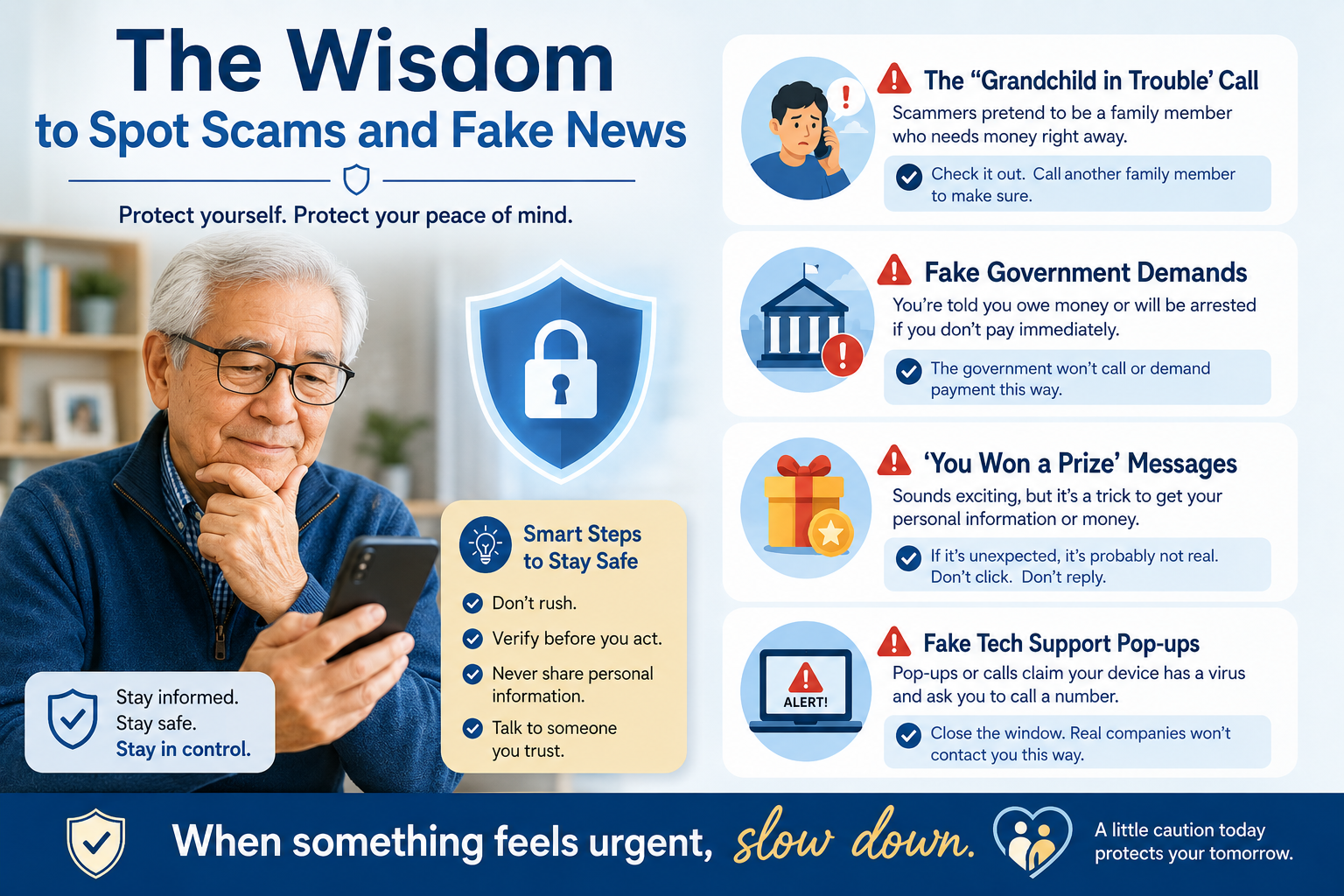
Let’s start by understanding how scams work. Scammers rely on two things: urgency and fear. They want you to panic and act quickly, before you have time to think. Therefore, the single most powerful rule is this: when something feels urgent, slow down.
So what are the most common scams to watch for?
The Most Common Scams Targeting Seniors
First, the “grandchild in trouble” scam. Someone calls, pretending to be your grandchild in an emergency, asking for money. However, real emergencies rarely demand secret, immediate payment. Always hang up and call your family directly to check.
Second, the “government” scam. Someone claims to be from the tax office or Social Security, demanding payment or personal information. Remember this: real government agencies never call to demand immediate payment or threaten arrest.
Third, the “prize” scam. A message says you’ve won a lottery or prize you never entered. But you cannot win a contest you never joined. If you must pay a fee to claim a prize, it’s always a scam.
Fourth, fake tech support. A pop-up warns your computer has a virus and gives a number to call. Instead of calling, close the window. Real companies don’t warn you this way.
Now let’s talk about fake news. Not everything online is true. Before believing or sharing a story, ask a few questions. Who published this? Do other trusted sources report the same thing? Does it seem designed to make me angry or afraid?
Here are some simple rules to keep you safe. Never give personal information to someone who contacts you first. Never send money to someone you haven’t met. Also, when in doubt, ask a trusted family member or friend.
Being cautious doesn’t mean being fearful. Instead, it means being wise. With these simple habits, you can enjoy the digital world safely and confidently.
Today, share these tips with a friend. Together, we can all stay safer online.
https://www.consumer.ftc.gov For more information about online scams.
Next post: Where to Begin When You Worry About Money in Retirement